Original article
Level of knowledge and application of exercise periodization in rehabilitation by physical therapists and physical therapy students: an observational study / Nível de conhecimento e aplicação da periodização de exercícios na reabilitação por fisioterapeutas e estudantes de fisioterapia: um estudo observacional
Dalila de Araújo Moleiro1 (https://orcid.org/0000-0002-4447-9813)
Bruno Teixeira Goes2 (https://orcid.org/0000-0002-5782-6394)
Marcus Vinicius de Brito Santana3 (https://orcid.org/0000-0002-5755-8908)
1,2Escola Bahiana de Medicina e Saúde Pública (Salvador), Bahia, Brazil.
3C orresponding contact. Escola Bahiana de Medicina e Saúde Pública (Salvador), Bahia, Brazil. [email protected]
ABSTRACT | INTRODUCTION: Periodization is a planned variation of exercise variables to improve physical condition and is common in athlete training. Physical therapists can use it in rehabilitation for better results, but there is little information about the knowledge of physical therapists and students regarding this concept. OBJECTIVE: To assess the level of knowledge and application of physical therapy students and professionals regarding exercise periodization in rehabilitation. METHODS: A descriptive cross-sectional observational study carried out with physical therapy students and physical therapists, using a virtual questionnaire made available through social media. Physical therapy students aged ≥ 18 years and physical therapists trained at a higher education school in Brazil were included. Socio-demographic data (age and gender), academic information (whether they were professionals or students, level of training, area of expertise), and concepts and application of exercise periodization in rehabilitation were collected. Age was expressed as mean and standard deviation, and the qualitative variables were expressed as absolute frequency and percentage. RESULTS: 133 participants were included. The level of self-reported knowledge about exercise periodization in rehabilitation was low among students and moderate among professionals. Most professionals and students reported using exercise periodization concepts in rehabilitation, with 80% of professionals and 56.9% of students adopting this practice. However, 81.5% of professionals and 86.3% of students did not use the concepts of microcycle, mesocycle and macrocycle. CONCLUSION: The level of self-reported knowledge about exercise periodization in rehabilitation is low among students and moderate among professionals. Although many claim to prescribe periodized exercises, most are unaware of the application of basic concepts.
KEYWORDS: Exercise Periodization. Rehabilitation. Physical Therapy Clinical Practice. Teaching.
RESUMO | INTRODUÇÃO: Periodização é uma variação planejada das variáveis do exercício físico para aprimorar a condição física, sendo comum no treinamento de atletas. Fisioterapeutas podem usá-la na reabilitação para melhores resultados, mas há pouca informação sobre o nível de conhecimento dos fisioterapeutas e estudantes sobre este conceito. OBJETIVO: Avaliar o nível de conhecimento e aplicação de estudantes e profissionais de fisioterapia sobre a periodização de exercícios na reabilitação. MÉTODOS: Estudo observacional de corte transversal descritivo realizado com estudantes de fisioterapia e fisioterapeutas. Foram incluídos acadêmicos de fisioterapia com idade ≥ 18 anos e fisioterapeutas com formação em uma escola de ensino superior do Brasil. Foram coletados dados sociodemográficos (idade e sexo), informações acadêmicas (se eram profissionais ou estudantes, nível de formação, área de atuação), conceitos e aplicação da periodização de exercícios na reabilitação, por meio de um questionário virtual disponibilizado por mídias sociais. A idade foi expressa em média e desvio padrão e as variáveis qualitativas foram expressas com frequência absoluta e porcentagem. RESULTADOS: Foram incluídos 133 participantes. O nível de conhecimento autorrelatado sobre periodização de exercícios na reabilitação foi baixo entre estudantes e moderado entre os profissionais. A maioria dos profissionais e estudantes relatou utilizar conceitos de periodização de exercícios na reabilitação, com 80% dos profissionais e 56,9% dos estudantes adotando essa prática. Porém, 81,5% dos profissionais e 86,3% dos estudantes não utilizavam conceitos de microciclo, mesociclo e macrociclo. CONCLUSÃO: O nível de conhecimento autorrelatado sobre periodização de exercícios na reabilitação é baixo entre estudantes e moderado entre profissionais. Apesar de muitos afirmarem prescrever exercícios periodizados, a maioria desconhece a aplicação de conceitos básicos.
PALAVRAS-CHAVE: Periodização de Exercícios. Reabilitação. Prática Clínica da Fisioterapia. Ensino.
How to cite this article: Moleiro DA, Goes BT, Santana MVB. Level of knowledge and application of exercise periodization in rehabilitation by physical therapists and physical therapy students: an observational study. J Physiother Res. 2026;16:6589. https://doi.org/10.17267/2238-2704rpf.2026.e6589
Submitted Nov. 19, 2025, Accepted Mar. 6, 2026, Published Apr. 22, 2026
J. Physiother. Res., Salvador, 2026;16:e6589
https://doi.org/10.17267/2238-2704rpf.2026.e6589
ISSN: 2238-2704
Assigned editor: Juliana Goulardins
1. Introduction
Exercise periodization is a strategic approach in the context of physical training that systematically organizes variables such as intensity, volume, exercise order, recovery intervals, and types of muscle contraction. This structure aims to optimize results, promote physiological adaptations, prevent overtraining, and ensure continuous and balanced progression over time1. This is an essential concept for promoting neuromuscular adaptations and improving physical performance through the planned control of these variables, with the aim of maximizing benefits and minimizing the risk of injury and overload2,3. Although it is widely used in sports training, in the context of functional rehabilitation, where physical therapists play a key role, its implementation still requires a deeper understanding1,2,4,5.
Periodization of exercise has been shown to have benefits in a variety of clinical conditions, including pain reduction6,7, an increase in muscle strength6–10, resistance, flexibility, and restoration of functionality7. In addition, it contributes to reducing total cholesterol levels11 and fat percentage12. Although evidence suggests that exercise periodization in rehabilitation may be a useful tool, there is still a lack of specific studies in this area, which limits knowledge about its application and the consolidation of evidence-based guidelines. The scarcity of robust evidence on the effects of exercise periodization in the context of rehabilitation may itself be a reflection of the limited use of these resources in physical therapy clinical practice6,7,13. The hypothesis is that the low adoption of periodization contributes to the lack of studies, while the lack of evidence itself hinders its incorporation into professional practice1,4,6,7.
Despite advances in the training in physical therapy as a higher education profession, there is still a need to fully assume the prescription of exercises and develop assessment skills, which were previously attributed to other professionals14,15. The periodization of exercises is part of this planning and is an essential element in physical therapists education, as it is aligned with the need for criteria in the prescription of exercises. However, the available evidence on the level of knowledge of physical therapists on this topic is still limited. At the same time, gaps in knowledge of guidelines on physical exercise and physical activity among physical therapists are observed16–19, in addition to lack of confidence in prescribing exercises20. Given this context, the objective of this study was to evaluate the level of knowledge and application of exercise periodization in rehabilitation among physical therapy students and professionals.
2. Methodology
This is an observational, descriptive, cross-sectional study conducted in accordance with Strengthening the Reporting of Observational studies in Epidemiology - STROBE21. The study was approved by the Human Research Ethics Committee (CEP) of the Bahiana School of Medicine and Public Health (Escola Bahiana de Medicina e Saúde) with the following CAAE: 73928623.8.0000.5544 and followed the ethical premises of Ruling 466/12 of the National Health Council (CNS) and Circular Letter No. 2/2021/CONEP/SECNS/MS. Data collection was carried out between October 31, 2023, and February 5, 2024, in order to assess the level of knowledge and application of physical therapy students and professionals on the topic of “Periodization of exercises in rehabilitation.” Participants were recruited for the study using an online form that was sent via the researchers' social media accounts (WhatsApp, Instagram, Facebook). Recruitment was carried out using the snowball sampling method22, asking participants to forward the Google Forms link to physical therapy students or professionals in their social circle. The eligibility criteria were physical therapy students aged ≥ 18 years or physical therapy professionals trained at a higher education institution in Brazil.
Data collection began through the application of a questionnaire developed by the researchers based on scientific literature1,4,23. The instrument consisted of objective multiple-choice questions with only one correct answer for the theoretical questions and four alternatives. Answers were considered correct when they were in accordance with the theoretical references adopted in the construction of the instrument. The variable “area of practice” was structured with objective options representing established fields of professional practice, including the alternative “others”, with an open field for additional specification. The first stage was to invite participants and read the Informed Consent Form, agreeing to the document, then participants answered questions from the second and third stages. After that, sociodemographic data (gender, age) and information about academic background (whether they were professionals or students, level of education, and area of expertise) were collected. In the third stage, variables about knowledge and application of exercise periodization in rehabilitation were collected, including questions about volume, intensity, types of periodization, concepts, and clinical application. The questions in this block were made available as supplementary material. Regarding the application questions, 17 responses from students in their 1st to 4th semesters were disregarded exclusively in the analyses related to the clinical application of periodization, considering that there is no supervised internship during this period. In addition, one response referring to the variable “area of practice” was excluded due to inconsistency with the question asked, while the other information provided by this participant remained valid (Figure 1).
The online questionnaire did not allow for control of the environment, response time, or questions from participants. To minimize these potential biases, everyone was instructed to choose a comfortable place of their choice to respond, thus avoiding possible distractions or embarrassing situations. In addition, the research team was available to answer any questions.
The data were analyzed using IBM SPSS version 22. A descriptive analysis was performed on the sociodemographic data, information on academic background, and concepts and applications of Exercise Periodization in Rehabilitation. The quantitative variable, age, was expressed as mean and standard deviation (SD) after verifying normality using the Kolmogorov-Smirnov test. Qualitative variables, such as gender, professional or student, level of education, area of expertise, concepts, and application of the topic, were expressed as absolute frequency and percentage.
3. Results
A total of 133 participants were included in the study, of whom 65.4% were female (Figure 1). The mean age of the participants was 28.5 ± 8.5 years. Approximately half of the sample, 48.9%, consisted of physical therapy professionals. Regarding students, 38.3% were between the 5th and 10th semesters. Regarding the area of practice of physical therapy professionals, Intensive Care Physical Therapy accounted for 29.7% of professionals (Table 1).
Figure 1. Flow diagram of Eligibility
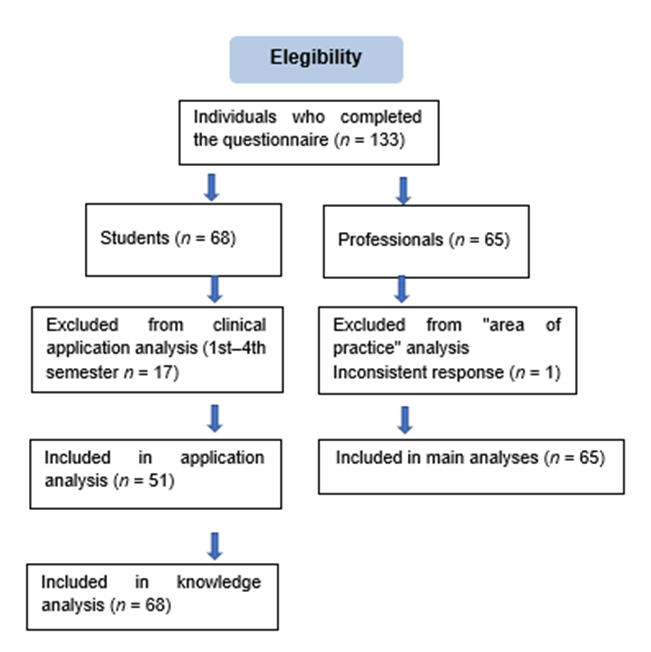
Table 1. Sociodemographic characteristics and information on the academic background of physical therapy professionals and students. Brazil, 2023–2024
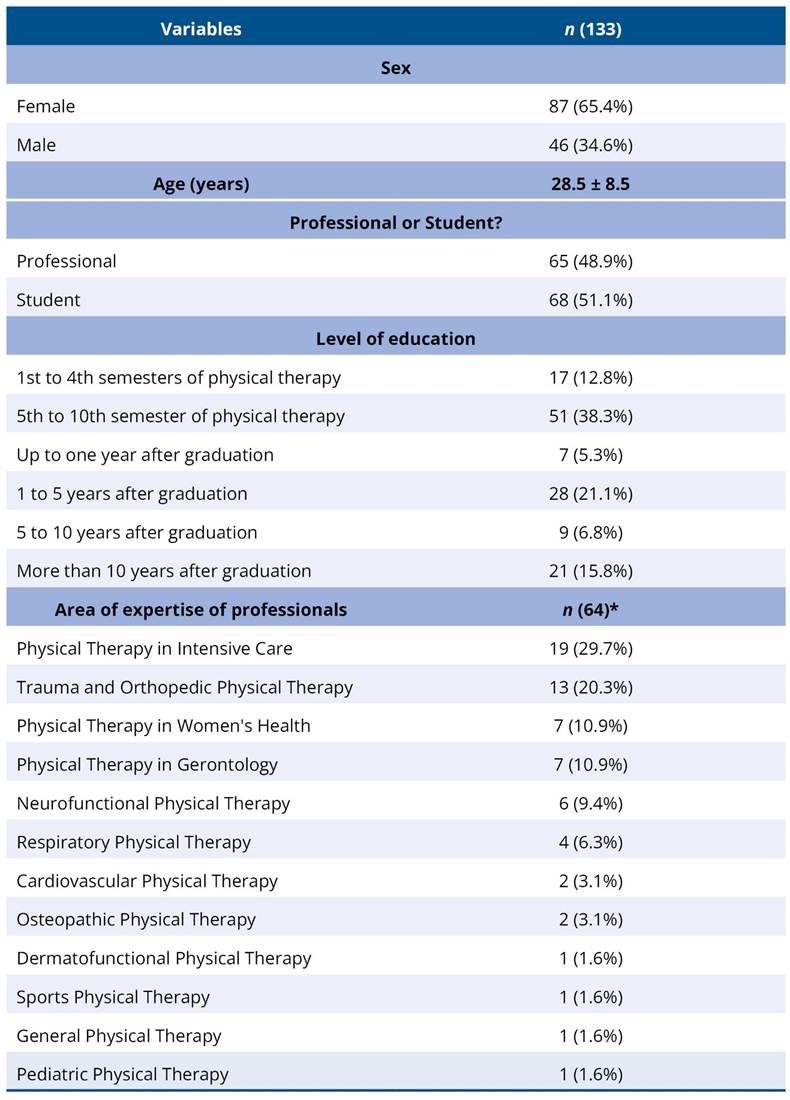
*One response was excluded in relation to the variable area of activity because the response was inconsistent with the question.
Quantitative variables are expressed as mean and standard deviation, and qualitative variables are expressed as absolute frequency and percentage (%).
Regarding obtaining greater access to information on exercise periodization in rehabilitation, 32.3% of participants reported that it was “during undergraduate studies”, while 21.8% reported that they did not obtain this knowledge (Table 2).
Table 2. Obtaining greater access to information on exercise periodization by physical therapy professionals and students. Brazil, 2023–2024
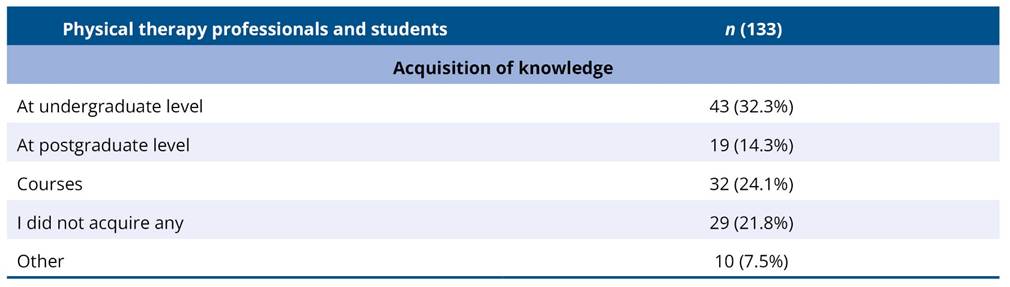
All variables were expressed in absolute frequency and percentage (%).
Regarding self-reported knowledge about exercise periodization, 70.8% of professionals classified themselves as having “moderate knowledge,” and 61.8% of students classified themselves as having “low knowledge”. Regarding the contribution of undergraduate education to knowledge in the area, it was classified as “low knowledge” and “moderate knowledge” (38.5% each) among professionals, and 51.5% of students classified it as “low knowledge” (Table 3).
Table 3. Self-reported level of knowledge about exercise periodization in rehabilitation by physical therapy professionals and students. Brazil, 2023–2024
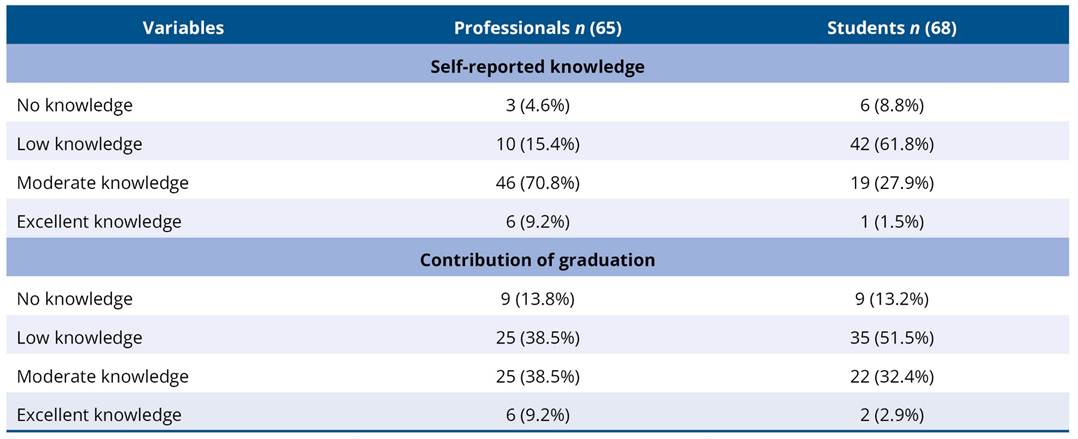
All variables were expressed in absolute frequency and percentage (%).
Regarding the use of exercise periodization concepts, 80% of professionals and 56.9% of students reported using them in clinical practice. In addition, 78.5% of professionals and 54.9% of students reported prescribing periodized exercises to patients. However, regarding the use of micro, meso, and macrocycle concepts in exercise prescription, 81.5% of professionals indicated that they do not use them (Table 4).
Table 4. Application of periodization by physical therapy professionals and students on Exercise Periodization in Rehabilitation. Brazil, 2023–2024
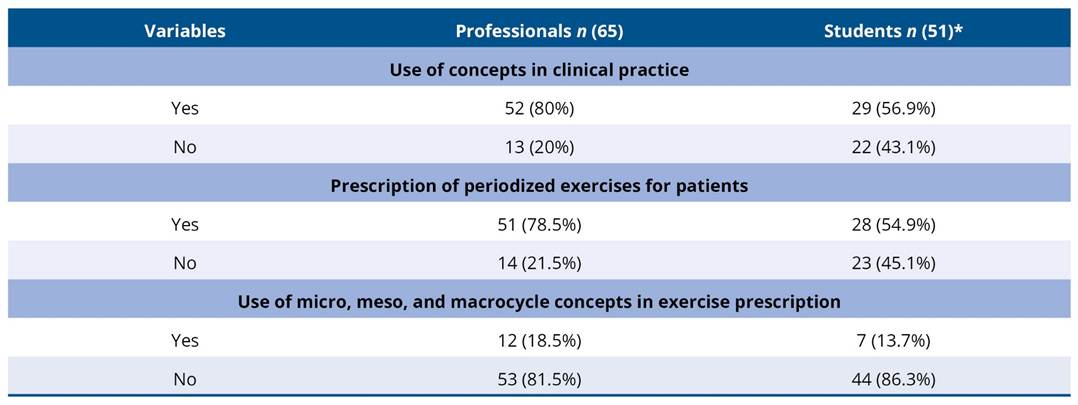
*17 students (1st–4th semesters) excluded; these semesters do not include supervised internships.
All variables were expressed in absolute frequency and percentage (%).
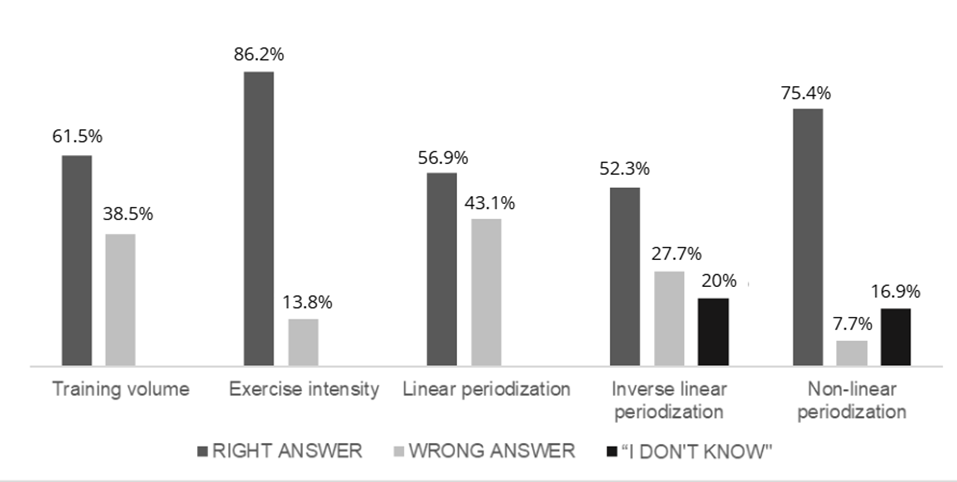
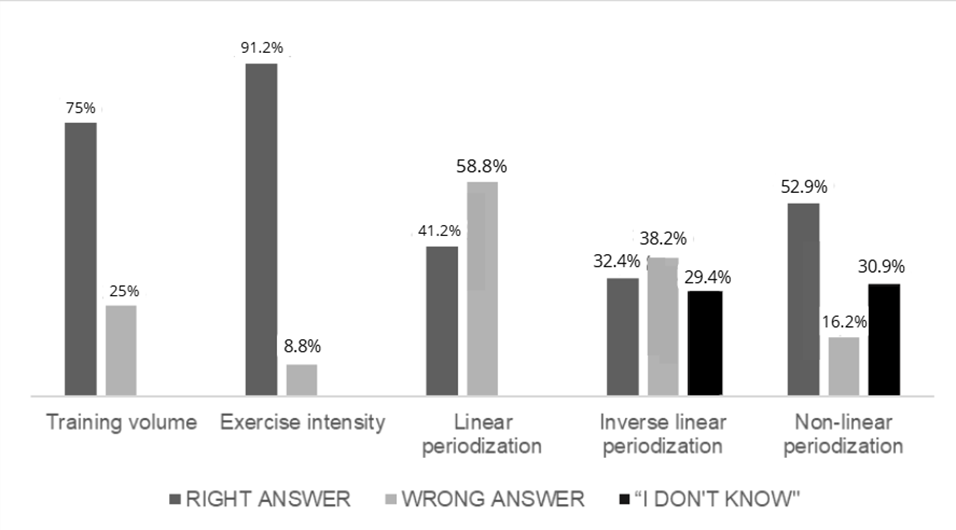
In Graph 1, 86.2% of professionals answered correctly the question about exercise intensity. In the question about linear periodization, 43.1% answered incorrectly. In the students' assessment, 58.8% answered the question about linear periodization incorrectly, and 91.2% answered correctly the question about exercise intensity (Graph 2).
Graph 1. Frequency of responses regarding concepts of Exercise Periodization in Rehabilitation among physical therapy professionals (n = 65). Brazil, 2023–2024
All variables were expressed as percentages (%).
Graph 2. Frequency of responses regarding concepts of Exercise Periodization in Rehabilitation among physical therapy students (n = 68). Brazil, 2023–2024
All variables were expressed as percentages (%).
4. Discussion
To our knowledge, this was the first study to assess the level of knowledge and application of exercise periodization in rehabilitation among physical therapy students and professionals. The results indicated that self-reported knowledge was classified as low among students and moderate among professionals. The use of concepts such as microcycle, mesocycle, and macrocycle was reported by a minority of participants, although these concepts are structurally related to training organization. A proportion of participants reported prescribing periodized exercises, while the consistent use of training cycle concepts was not described. Incorrect responses were also identified in questions addressing volume and intensity, elements that are conceptually linked to exercise prescription.
The limited knowledge about exercise periodization observed in the results is consistent with other previously conducted investigations16–20. A study conducted among physical therapy internship supervisors in Ireland showed that 66% of them were dissatisfied with their level of knowledge regarding exercise promotion and prescription. In addition, during the focus group, one of the most prominent themes was the physical therapist's perception of their role19. Similar scenarios have also been demonstrated in specific areas. In a study involving 1,352 physical therapists from 56 different countries, when asked about their perception and competence in prescribing aerobic and resistance exercises, a considerable portion reported difficulties in prescribing aerobic and resistance exercises20. Accordingly, most Australian physical therapists have demonstrated poor knowledge of physical activity and sedentary lifestyle guidelines17, similar to what has been reported in the United Kingdom16 and in Israel18. Although physical therapists report promoting physical activity, the lack of knowledge about physical activity guidelines is concerning18.
Findings suggest that the lack of knowledge about physical activity guidelines and exercise periodization is not restricted to a single region or country; it is a challenge faced by physical therapists in various parts of the world16–20. If physical therapists have difficulty with knowledge about physical activity, which is broader and more accessible, they are likely to have even more limitations in prescribing exercises, which requires understanding of physiology, biomechanics, training principles, among other technical aspects16–18,20. In developed countries such as Ireland, there is already a recognized need for significant reevaluation of physical therapy curricula to address important gaps in content related to exercise prescription and physical activity24. Accordingly, in this sample, participants reported a low or moderate contribution of undergraduate education to their knowledge of exercise periodization in rehabilitation. This perception highlights aspects of training that warrant further investigation in relation to exercise prescription competencies.
There is a need for reflection and reassessment of physical therapy curricula worldwide, and it is crucial to promote in-depth discussions about the role of the profession and its future15. This need is reinforced when we consider studies suggesting that pharmacists, as accessible professionals in communities, should have the knowledge to advise patients on exercise prescription issues, such as frequency, exercise dose, and intensity25. This measure involves the risk of holding professionals accountable who may not have developed the minimum skills required to plan and structure a therapeutic exercise program and, therefore, ignores the therapeutic potential of exercise for a range of health conditions26,27. It is essential to consider that this will have significant impacts on professional identity and will contribute to the weakening of physical therapy15,28.
The professional identity of the physical therapist is built on an understanding of human movement29. An emerging and important concept has been termed the human movement system, which is an integrative approach that focuses on the interrelationship between the systems of the human body responsible for movement. This proposal identifies the physical therapist as the professional responsible for identifying possible dysfunctions related to this system and for proposing treatment15. The prescription of exercises, provided for in the periodization of physical exercises in rehabilitation, becomes a crucial tool for its practice, since periodization involves the systematic planning and structuring of exercise programs, considering the specific needs of each patient4. The gaps identified in knowledge and application of exercise concepts may have implications for the consolidation of professional identity. It is possible that historical elements may help explain this phenomenon, since physical therapy began as a technical profession14. Not so long ago, in 1960, doctors were the only professionals responsible for diagnosis and prescribing interventions. Physical therapists were only responsible for replicating the exercises and other interventions proposed by doctors, which were often suggested in a nonspecific manner and were most likely less effective. There was no professional identity that included physical therapy diagnosis15,29. This historical context may have contributed to conflicts in professional identity, lack of clarity regarding the role of physical therapy assessment, and lack of authority in prescribing exercises, which is consistent with the findings of the present study.
The main limitations of our study include the use of an unvalidated instrument to assess the level of knowledge and application of exercise periodization in rehabilitation. The questionnaire did not undergo a formal validation process, structured pretesting, or expert evaluation. However, its construction was based on consolidated scientific references on exercise periodization, which informed the development of the items and the definition of the answers considered correct. The instrument also did not consider variables related to the region of the country, type of educational institution (public or private), or postgraduate level of the participants, which limits the characterization of the representativeness of the sample and the extrapolation of the findings. The sample was obtained for convenience, through dissemination on social networks and a snowball sampling strategy, which may be associated with participation bias and limitations in terms of representativeness. Data collection was performed using an anonymous online questionnaire, which may be associated with potential biases, such as the possibility of consulting external sources (the internet or books), despite instructions to respond without consulting such sources. There were no technical restrictions to prevent multiple submissions, nor was it possible to estimate the response rate. In addition, information regarding academic background and professional experience was based on self-reporting, without formal documentary verification. Future research should advance the validation of specific instruments to assess knowledge related to periodization applied to physical therapy, as well as explore teaching practices in universities, focusing on improving curricula and more effectively integrating this content into professional training. Additional studies should also investigate educational strategies that strengthen the application of periodization in clinical practice and assess the possible repercussions of these gaps on professional performance and the consolidation of physical therapy in the field of health. In this context, strengthening professional identity and continuously improving technical knowledge are fundamental to ensuring the quality of physical therapy in the rehabilitation process.
5. Conclusion
The level of self-reported knowledge about exercise periodization in rehabilitation was low among students and moderate among professionals. Physical therapy students and professionals reported applying periodization concepts in exercise prescription during clinical practice and internships, although they did not use microcycle, mesocycle, and macrocycle concepts in exercise prescription. Error rates in essential concepts such as exercise volume and intensity highlight weaknesses in technical knowledge, suggesting that knowledge about exercise periodization is limited, making it essential to reflect on the curriculum and education of these professionals.
Authors’ contributions
The authors declared that they have made substantial contributions to the work in terms of the conception or design of the research; the acquisition, analysis or interpretation of data for the work; and the writing or critical review for relevant intellectual content. All authors approved the final version to be published and agreed to take public responsibility for all aspects of the study.
Competing interests
No financial, legal, or political conflicts involving third parties (government, private companies, and foundations, etc.) were declared for any aspect of the submitted work (including but not limited to grants and funding, advisory board participation, study design, manuscript preparation, statistical analysis, etc.).
Indexers
The Journal of Physiotherapy Research is indexed by DOAJ, EBSCO, LILACS and Scopus.
References
1. Lorenz DS, Reiman MP, Walker JC. Periodization: current review and suggested implementation for athletic rehabilitation. Sports Health. 2010;2(6):509-18. https://doi.org/10.1177/1941738110375910
2. Reiman MP, Lorenz DS. Integration of strength and conditioning principles into a rehabilitation program. Int J Sports Phys Ther [Internet]. 2011;6(3):241-53. Cited: PMID: 21904701
3. Lorenz D, Morrison S. Current concepts in periodization of strength and conditioning for the sports physical therapist. Int J Sports Phys Ther [Internet]. 2015;10(6):734-47. Cited: PMID: 26618056
4. Kakavas G, Malliaropoulos N, Bikos G, Pruna R, Valle X, Tsaklis P, et al. Periodization in anterior cruciate ligament rehabilitation: a novel framework. Med Princ Pract. 2021;30(2):101-8. https://doi.org/10.1159/000511228
5. Issurin VB. New horizons for the methodology and physiology of training periodization. Sports Med. 2010;40(3):189-206. https://doi.org/10.2165/11319770-000000000-00000
6. Alfredson H, Pietilä T, Jonsson P, Lorentzon R. Heavy-load eccentric calf muscle training for the treatment of chronic Achilles tendinosis. Am J Sports Med. 1998;26(3):360-6. https://doi.org/10.1177/03635465980260030301
7. Kell RT, Asmundson GJG. A comparison of two forms of periodized exercise rehabilitation programs in the management of chronic nonspecific low-back pain. J Strength Cond Res. 2009;23(2):513-23. https://doi.org/10.1519/JSC.0b013e3181918a6e
8. Prestes J, Lima C, Frollini AB, Donatto FF, Conte M. Comparison of linear and reverse linear periodization effects on maximal strength and body composition. J Strength Cond Res. 2009;23(1):266-74. https://doi.org/10.1519/jsc.0b013e3181874bf3
9. Rhea MR, Ball SD, Phillips WT, Burkett LN. A comparison of linear and daily undulating periodized programs with equated volume and intensity for strength. J Strength Cond Res [Internet]. 2002;16(2):250-5. Cited: PMID: 11991778
10. Buford TW, Rossi SJ, Smith DB, Warren AJ. A comparison of periodization models during nine weeks with equated volume and intensity for strength. J Strength Cond Res [Internet]. 2007;21(4):1245-50. Cited: PMID: 18076234
11. Libardi CA, Bonganha V, Conceição MS, Souza GV, Bernardes CF, Secolin R, et al. The periodized resistance training promotes similar changes in lipid profile in middle-aged men and women. J Sports Med Phys Fitness [Internet]. 2012;52(3):286-92. Cited: PMID: 22648467
12. Lima C, Boullosa DA, Frollini AB, Donatto FF, Leite RD, Gonelli PRG, et al. Linear and daily undulating resistance training periodizations have differential beneficial effects in young sedentary women. Int J Sports Med. 2012;33(9):723-7. https://doi.org/10.1055/s-0032-1306324
13. Wong YM, Chan ST, Tang KW, Ng GYF. Two modes of weight training programs and patellar stabilization. J Athl Train. 2009;44(3):264-71. https://doi.org/10.4085/1062-6050-44.3.264
14. Oliveira ALO, Nunes ED. Physiotherapy: a historical analysis of the transformation from an occupation to a profession in Brazil. Braz J Phys Ther. 2015;19(4):286-93. https://doi.org/10.1590/bjpt-rbf.2014.0103
15. Sahrmann S. The how and why of the movement system as the identity of physical therapy. Int J Sports Phys Ther [Internet]. 2017;12(6):862-9. Cited: PMID: 29158948
16. Lowe A, Littlewood C, McLean S, Kilner K. Physiotherapy and physical activity: a cross-sectional survey exploring physical activity promotion, knowledge of physical activity guidelines and the physical activity habits of UK physiotherapists. BMJ Open Sport Exerc Med. 2017;3(1):e000290. https://doi.org/10.1136/bmjsem-2017-000290
17. Freene N, Cools S, Bissett B. Are we missing opportunities? Physiotherapy and physical activity promotion: a cross-sectional survey. BMC Sports Sci Med Rehabil. 2017;9:19. https://doi.org/10.1186/s13102-017-0084-y
18. Yona T, Ben Ami N, Azmon M, Weisman A, Keshet N. Physiotherapists lack knowledge of the WHO physical activity guidelines: a local or a global problem? Musculoskelet Sci Pract. 2019;43:70-5. https://doi.org/10.1016/j.msksp.2019.07.007
19. O'Donoghue G, Cusack T, Doody C. Contemporary undergraduate physiotherapy education in terms of physical activity and exercise prescription: practice tutors’ knowledge, attitudes and beliefs. Physiotherapy. 2012;98(2):167-73. https://doi.org/10.1016/j.physio.2011.04.348
20. Barton CJ, King MG, Dascombe B, Taylor NF, Silva DO, Holden S, et al. Many physiotherapists lack preparedness to prescribe physical activity and exercise to people with musculoskeletal pain: a multinational survey. Phys Ther Sport. 2021;49:98-105. https://doi.org/10.1016/j.ptsp.2021.02.002
21. von Elm E, Altman DG, Egger M, Pocock SJ, Gøtzsche PC, Vandenbroucke JP, et al. The strengthening the reporting of observational studies in epidemiology (STROBE) statement: guidelines for reporting observational studies. Lancet. 2007;370(9596):1453-7. https://doi.org/10.1016/S0140-6736(07)61602-X
22. Vinuto J. A amostragem em bola de neve na pesquisa qualitativa: um debate em aberto. Tematicas [Internet]. 2014;22(44):203-20. Available from: https://econtents.sbu.unicamp.br/inpec/index.php/tematicas/article/view/10977
23. Kataoka R, Vasenina E, Loenneke J, Buckner SL. Periodization: variation in the definition and discrepancies in study design. Sports Med. 2021;51(4):625-51. https://doi.org/10.1007/s40279-020-01414-5
24. O'Donoghue G, Doody C, Cusack T. Physical activity and exercise promotion and prescription in undergraduate physiotherapy education: content analysis of Irish curricula. Physiotherapy. 2011;97(2):145-53. https://doi.org/10.1016/j.physio.2010.06.006
25. Dirks-Naylor AJ, Griffiths CL, Gibson JL, Luu JA. The prevalence of exercise prescription-related course offerings in United States pharmacy school curricula: exercise is medicine. Adv Physiol Educ. 2016;40(3):319-22. https://doi.org/10.1152/advan.00070.2016
26. Molloy C, Long L, Mordi IR, Bridges C, Sagar VA, Davies EJ, et al. Exercise-based cardiac rehabilitation for adults with heart failure. Cochrane Database Syst Rev. 2024;3(3):CD003331. https://doi.org/10.1002/14651858.CD003331.pub6
27. Alouini S, Memic S, Couillandre A. Pelvic floor muscle training for urinary incontinence with or without biofeedback or electrostimulation in women: a systematic review. Int J Environ Res Public Health. 2022;19(5):2789. https://doi.org/10.3390/ijerph19052789
28. Sahrmann S. Doctors of the movement system: identity by choice or therapists providing treatment-identity by default. Int J Sports Phys Ther. 2022;17(1):1-6. https://doi.org/10.26603/001c.30175
29. Sahrmann SA. Diagnosis by the physical therapist-a prerequisite for treatment. Phys Ther. 1988;68(11):1703-6. https://doi.org/10.1093/ptj/68.11.1703
